Soaked & Slow-Cooked Lentil Dal with Ghee Tarka
Dal has been feeding families across generations not because it is simple, but because it is wise: soaking the lentils overnight breaks down the anti-nutrients that make legumes hard on digestion, and finishing the pot with a ghee tarka carries the fat-soluble compounds in those spices straight into the dish where the body can actually use them. We make this most weeks when the evening calls for something deeply nourishing without a great deal of fuss, and it is one of those meals the children ask for by name. Ancestral kitchens around the world understood that preparation time is part of the recipe, and this dal is a quiet reminder of that.
Leftovers store very well in an airtight container in the refrigerator for up to four days, and the dal actually deepens in flavour overnight. When reheating, add a small splash of water to loosen it and warm gently over a low heat, stirring often. You can also prepare a fresh small tarka to pour over reheated dal if you want to revive that fragrant top note.
Serve over warm basmati rice that has been cooked with a knob of ghee and a pinch of turmeric, or alongside sourdough flatbreads for scooping. A simple side of plain full-fat yoghurt and a cucumber and tomato salad rounds the meal out beautifully for a complete family dinner.
Method
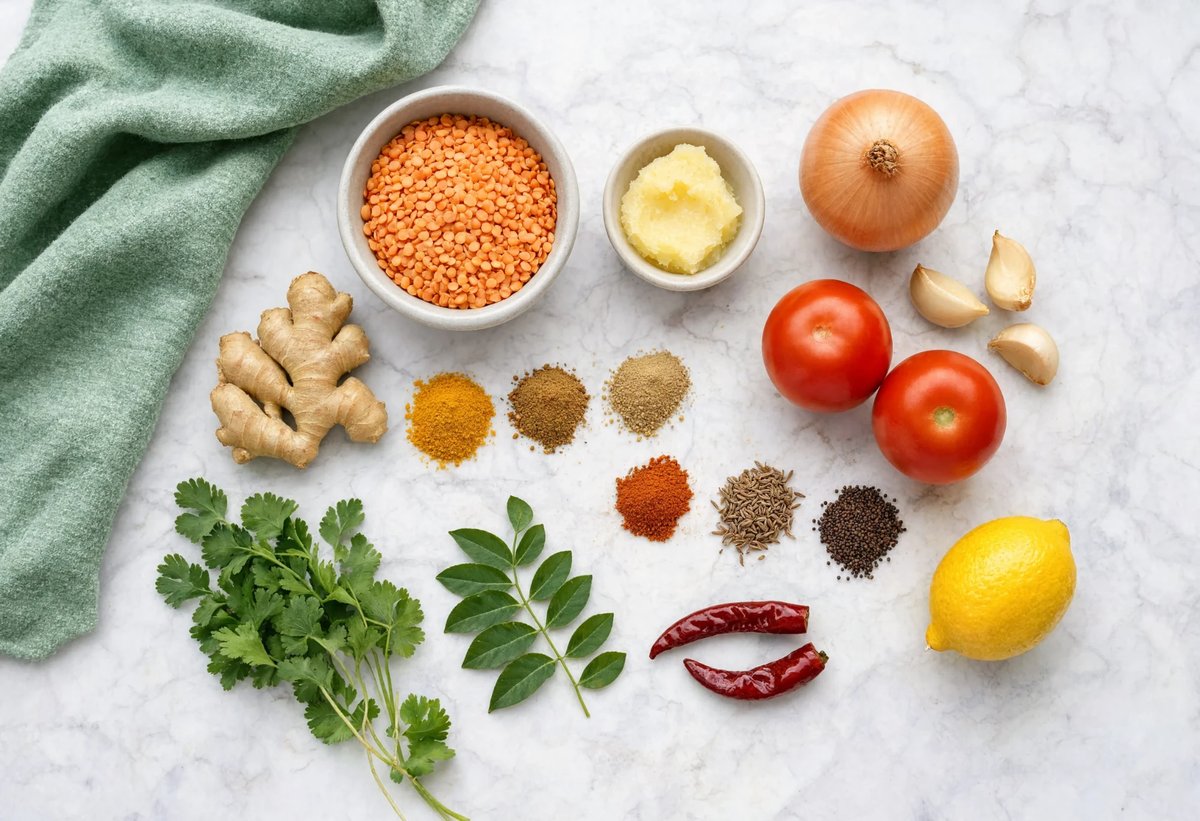
The evening before you plan to cook, place the red lentils in a large bowl and cover generously with cold filtered water. Allow them to soak for a minimum of eight hours and up to twelve. This soaking step is not optional in our kitchen: it neutralises phytic acid, reduces cooking time considerably, and makes the finished dal far gentler on the digestive system, particularly for children.
When you are ready to cook, drain the soaked lentils through a fine mesh sieve and rinse them thoroughly under cold running water until the water runs clear. Set them aside to drain while you prepare everything else.
Place a large, heavy-based pot or Dutch oven over a medium heat. Add the first measure of ghee and allow it to melt and shimmer without smoking. Add the diced onion and cook, stirring regularly, for eight to ten minutes until it is soft, translucent, and beginning to turn a light golden colour at the edges. Take your time here as a properly softened onion forms the flavour foundation for the entire dish.
Add the minced garlic and grated ginger to the pot and stir them through the onion. Cook for a further two minutes, stirring constantly, until the raw edge has disappeared and the mixture is fragrant.
Add the chopped tomatoes and stir everything together. Cook for five to six minutes, pressing the tomatoes gently with the back of your spoon as they soften, until they have broken down and formed a rough paste with the onion, garlic and ginger.
Add the ground turmeric, ground cumin, ground coriander, ground fenugreek and cayenne pepper directly to the tomato mixture. Stir continuously for sixty to ninety seconds, cooking the spices in the ghee and tomato base. This brief step, called bhunao in traditional cooking, is what lifts the dal from pleasant to deeply flavoured.
Add the drained and rinsed lentils to the pot and stir to coat them in the spiced tomato base. Pour in the filtered water or vegetable stock and add the sea salt. Stir well to combine, then bring the pot to a gentle boil over a medium-high heat.
Once boiling, reduce the heat to low, place a lid slightly ajar on the pot, and allow the dal to simmer gently for thirty-five to forty-five minutes, stirring every ten minutes or so. The lentils should gradually become very soft and begin to dissolve into the liquid, creating a thick, porridge-like consistency. If the dal thickens faster than you would like, add an extra splash of warm water and stir it through. Taste and adjust the salt at this point.
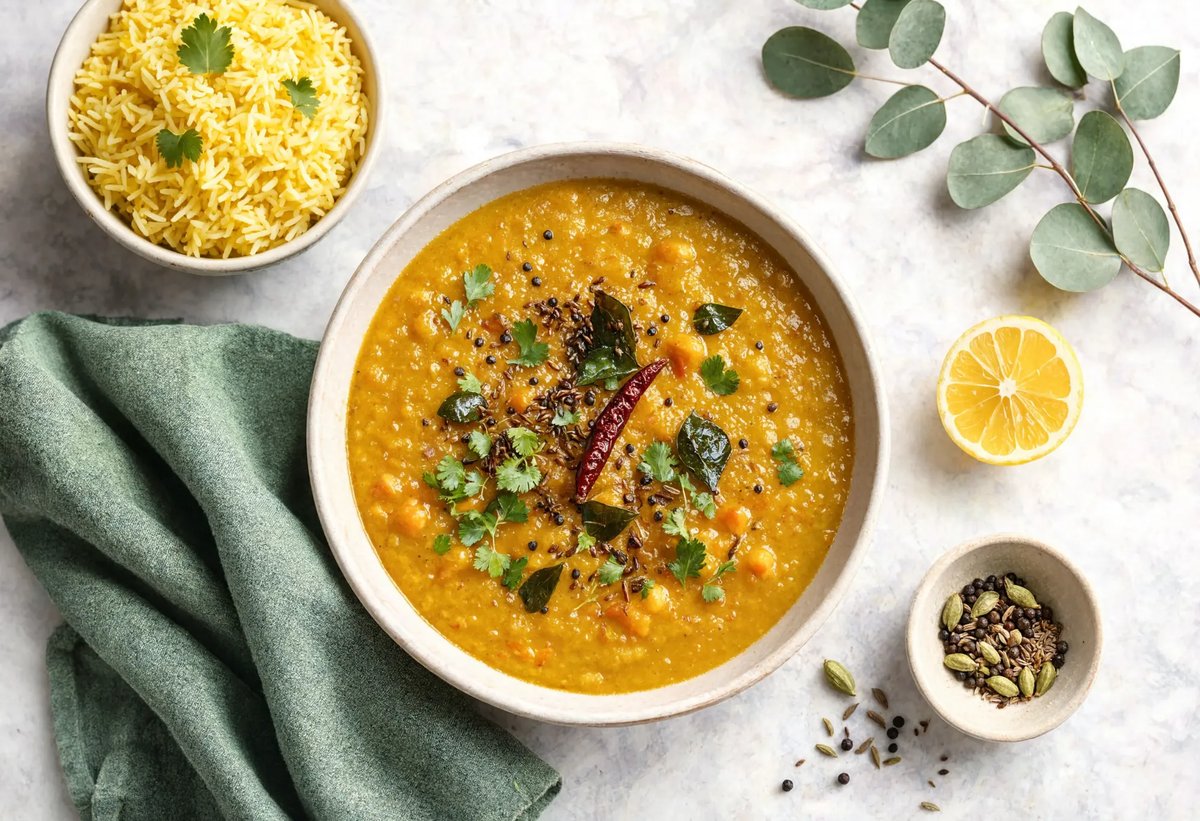
When the dal is fully cooked and sitting at your preferred consistency, prepare the tarka. Place a small heavy-based frying pan over a medium-high heat and add the second measure of ghee. Allow it to heat until it is clearly shimmering and hot. Add the whole cumin seeds and brown mustard seeds and let them sizzle in the ghee for about thirty seconds until the mustard seeds begin to pop.
Immediately add the curry leaves and dried red chillies to the pan. They will spit briefly so stand back and be ready. Swirl the pan once or twice and allow the spices to bloom in the ghee for a further twenty to thirty seconds. The kitchen should smell extraordinary at this point.
Pour the entire contents of the tarka pan directly over the cooked dal in one confident movement. You will hear a satisfying sizzle as it hits the surface. Stir the tarka through the dal gently to distribute it, then place the lid back on the pot for two minutes to allow the flavours to meld together.
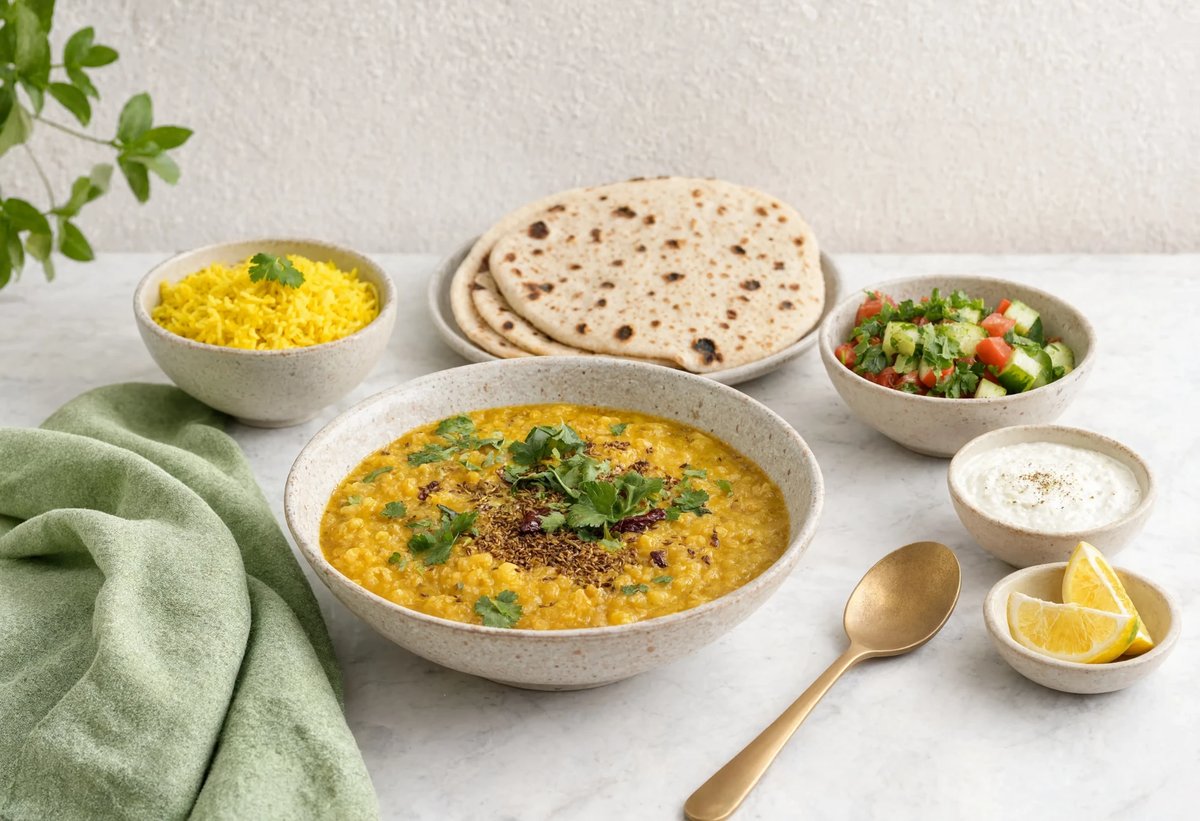
Serve the dal in deep bowls, scattered generously with fresh coriander leaves and with lemon wedges alongside for squeezing over at the table. A good squeeze of lemon just before eating lifts all the earthy, spiced flavours beautifully.