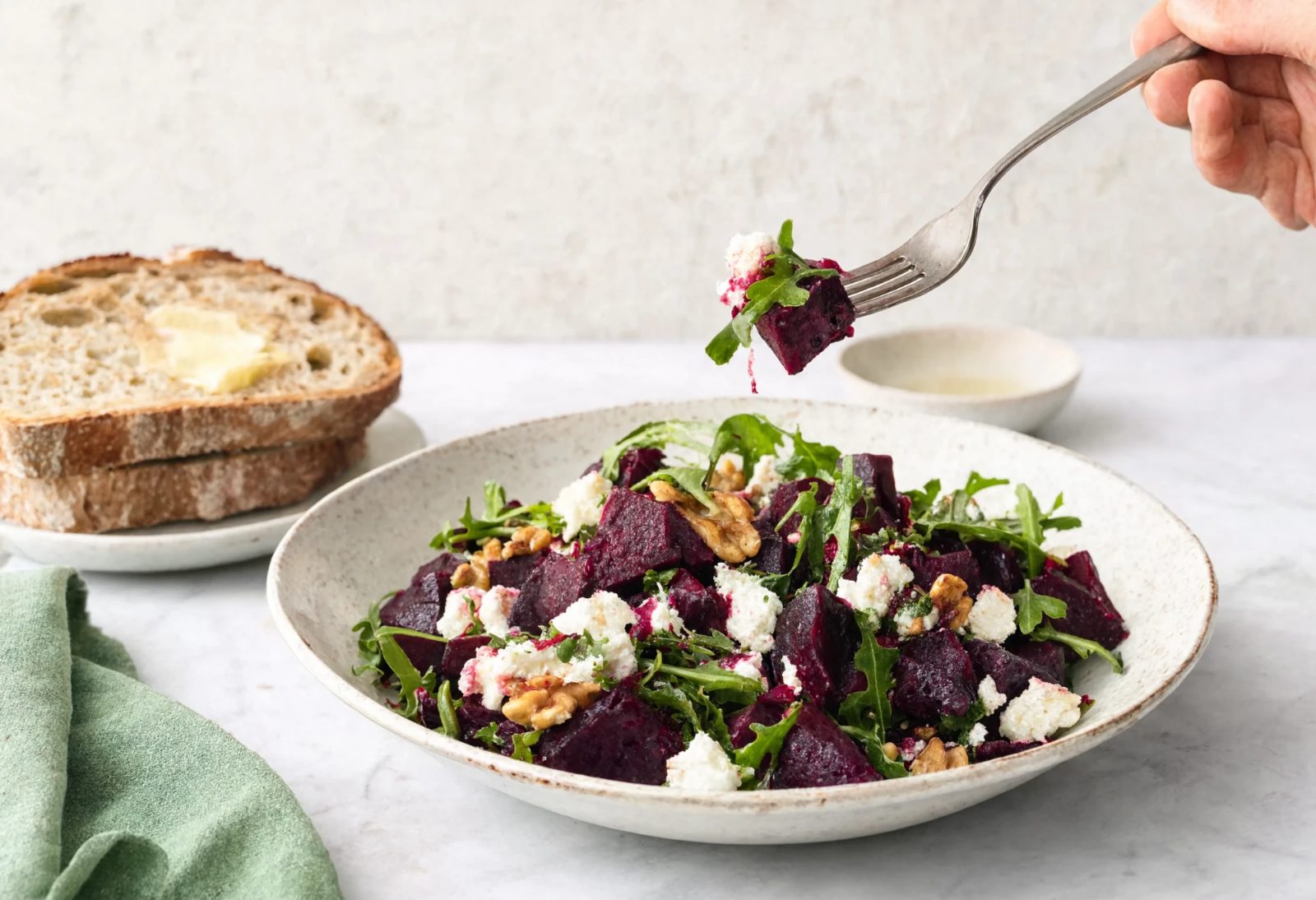
Wild Fermented Beetroot and Goat's Cheese Salad
This salad came about because we wanted something that could hold its own as a proper main, not just a side thought, and the lacto-fermented beetroot we had sitting quietly in the pantry turned out to be exactly the thing that made it sing. Wild fermentation is one of the oldest ways humans have preserved the harvest, and when you use Australian-grown beetroot, the good bacteria that develop are genuinely local to the soil and season. The result is a plate full of living cultures, earthy sweetness, creamy goat's cheese and enough substance to carry a weeknight dinner with ease.
The fermented beetroot can be made up to three weeks in advance and kept sealed in the refrigerator, making this a genuinely practical main for busy weeks. If goat's cheese is not to everyone's taste at the table, a good quality Persian feta works beautifully in its place and carries a similar creamy, tangy quality that balances the beetroot.
Serve with thick slices of sourdough bread spread with good butter, or alongside a simple roasted chicken if you want to add more protein to the meal. A chilled glass of skin-contact wine or a sparkling water with a squeeze of orange is a lovely pairing alongside.
Method
Begin the wild fermentation at least five days before you plan to serve the salad, as the beetroot needs time to develop its full flavour and probiotic culture. Wash a large glass jar (approximately 1.5 litre capacity) thoroughly and rinse it well with very hot water to clean it without introducing any soap residue that might inhibit fermentation.
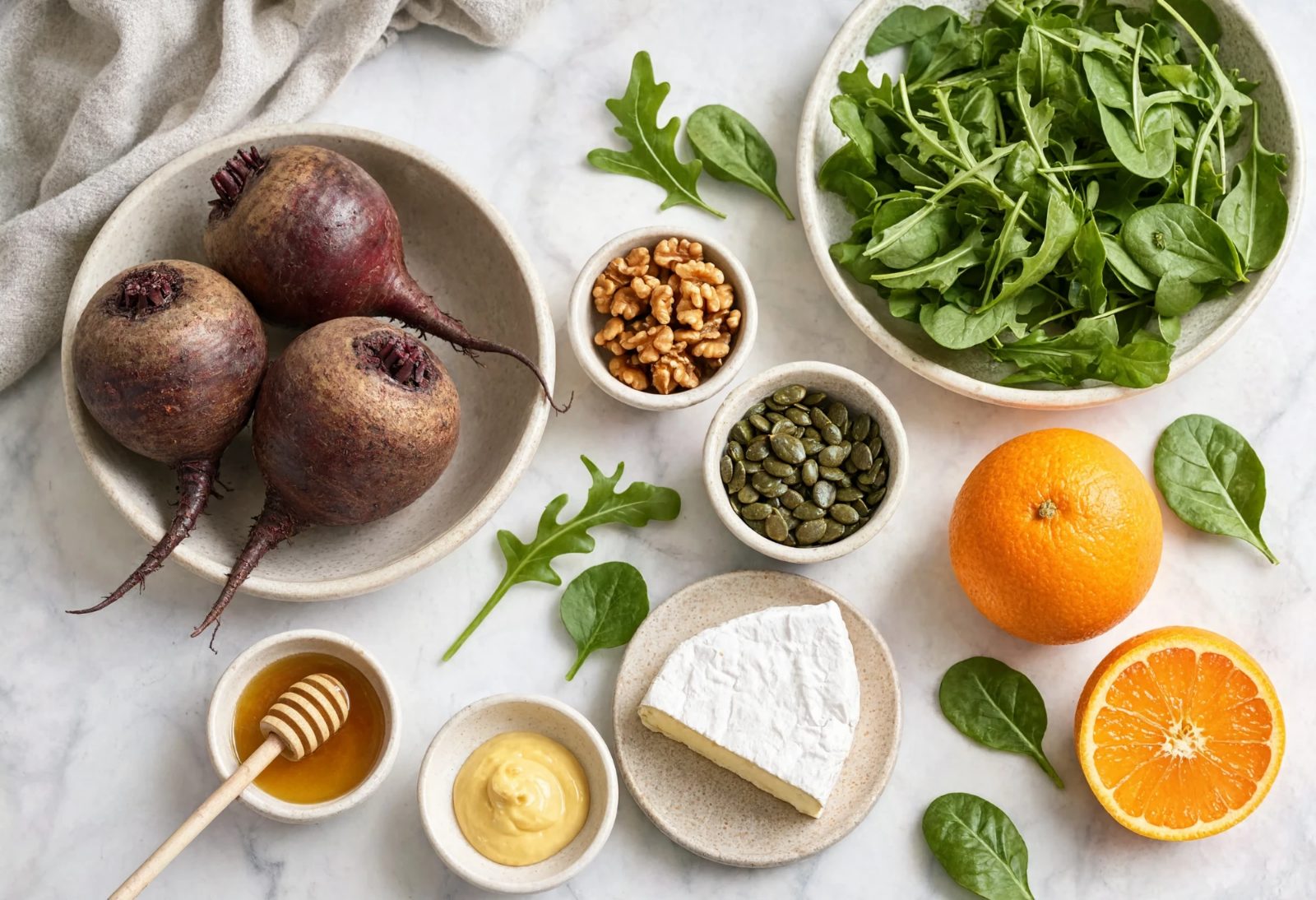
Dissolve the sea salt in the litre of filtered water, stirring well until the salt is completely incorporated. It is important to use non-chlorinated water here, as chlorine in tap water can prevent the beneficial bacteria from doing their work. If you only have tap water available, leave it uncovered on the bench overnight and the chlorine will dissipate.
Peel the beetroot and cut them into batons or wedges roughly one centimetre thick. You want them substantial enough to hold their texture through the fermentation process rather than turning soft.
Pack the beetroot pieces firmly into the clean jar, tucking the garlic cloves, peppercorns and thyme sprigs in among the layers as you go. The aromatics are not just for flavour; they help create a more complex ferment.
Pour the prepared salt brine over the beetroot until everything is completely submerged, leaving about two centimetres of space at the top of the jar. It is essential that the beetroot stays below the surface of the brine throughout fermentation, as any pieces exposed to air can develop surface mould. Use a small zip-lock bag filled with extra brine, or a clean stone, placed on top of the beetroot to keep everything weighted down.
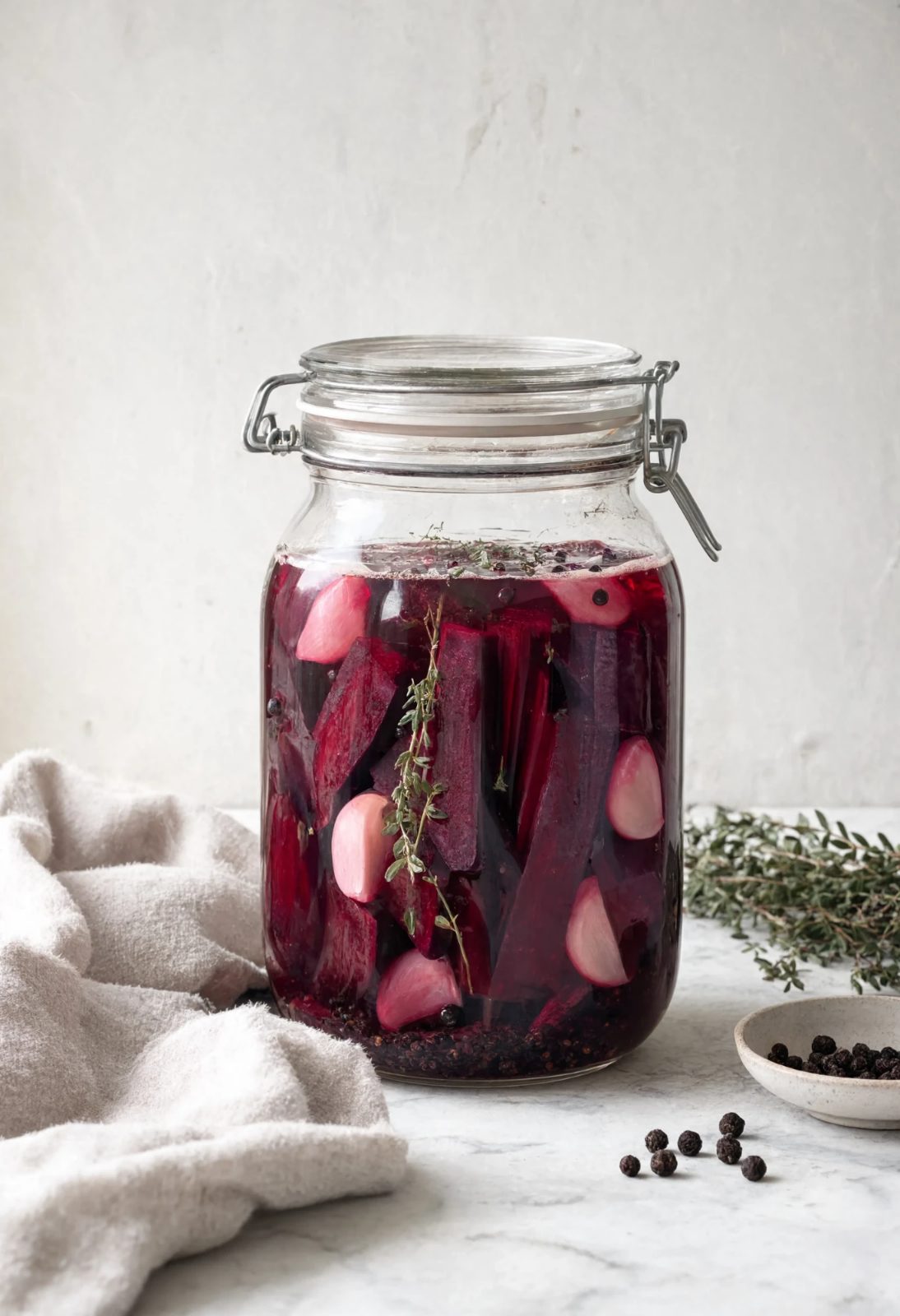
Cover the jar loosely with a cloth secured with a rubber band, or use a lid placed loosely on top to allow gases to escape. Place the jar on a plate to catch any brine that bubbles over, and leave it at room temperature, out of direct sunlight, ideally somewhere between 18 and 22 degrees Celsius.
After two days you should notice small bubbles beginning to form, which is the sign that lacto-fermentation is underway. Taste the brine at day three and again at day five. The beetroot is ready when it tastes pleasantly tangy, still earthy and sweet but with a bright, lively acidity that makes your mouth water. In warmer weather fermentation can move faster, so start tasting from day three. Once it reaches a flavour you love, seal the jar with a lid and move it to the refrigerator, where it will keep for several weeks.
When you are ready to assemble the salad, remove the fermented beetroot from the jar with a clean fork or tongs and set it aside. Reserve two tablespoons of the brine for the dressing, as it carries all of that wonderful cultured flavour and acts as a natural acidulant.
Make the dressing by whisking together the olive oil, reserved beetroot brine, raw honey and Dijon mustard in a small bowl until the mixture is emulsified and cohesive. Taste it and adjust with a little sea salt and cracked pepper. The brine is already salty, so add any extra salt carefully.
Toast the pumpkin seeds in a dry frying pan over medium heat for two to three minutes, shaking the pan regularly, until they are golden and beginning to pop. Remove them from the heat and allow them to cool on a plate.
Combine the rocket and baby spinach in a large wide serving bowl and toss them gently together so the greens are evenly distributed. Arrange the fermented beetroot pieces across the top, followed by the orange segments and the finely sliced red onion.
Scatter the crumbled goat's cheese across the salad, then add the toasted walnuts and the cooled pumpkin seeds. Drizzle the dressing over everything in a generous, even pour, and finish with a few extra cracks of black pepper. Bring the salad to the table and toss it lightly at the last moment, or serve it arranged as it is and let everyone help themselves.